.png) Balance Claims
Balance Claims
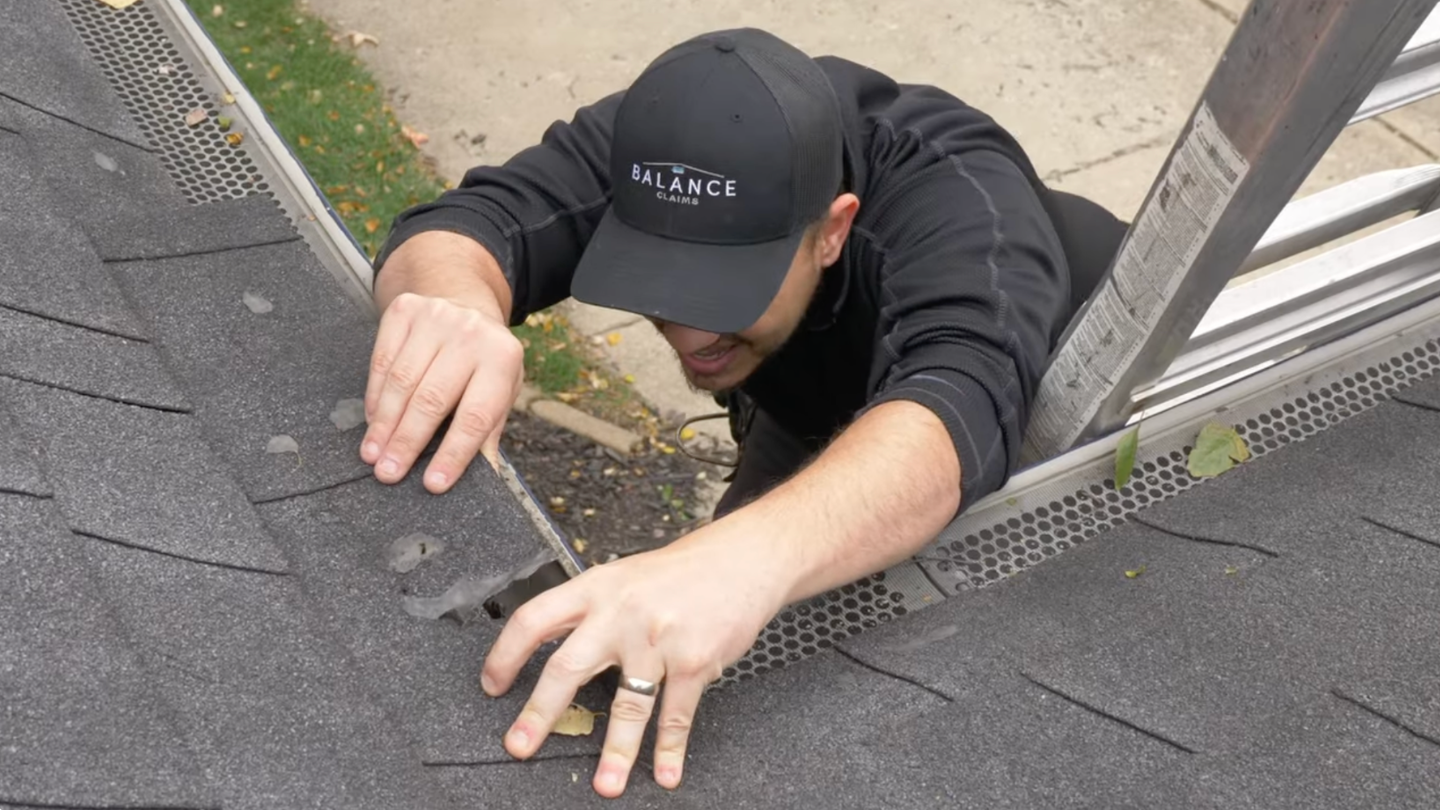
When a storm hits and an asphalt roof needs a tear-off, replacing shingles, felt, and ridge cap is standard on almost every carrier estimate.
But what happens when you pull back those damaged shingles and discover rotted, compromised, or un-nailable roof decking?
Too often, contractors run into a wall with adjusters. The adjuster claims the sheathing damage was "pre-existing," or they rely on default software pricing that pays pennies on the dollar for OSB or plywood replacement. On a standard residential roof, accepting the carrier's initial stance on decking can easily cost your business $1,500 to $3,000 in unrecovered material and labor expenses.
The good news? You don't have to absorb the cost of solid sheathing repairs.
Here is why adjusters leave sheathing off estimates—and the exact documentation strategy required to get it approved.
The Gap: IRC Building Code vs. Carrier Defaults
Insurance policies owe to restore a property to a condition where new materials can be installed correctly according to manufacturer specifications and local building codes.
Under Section R905.2.1 of the International Residential Code (IRC), asphalt shingles must be applied over solidly sheathed decks. If sheathing is delaminated, severely gapped, water-damaged, or improperly fastened, installing a new roof on top violates manufacturer warranty specifications (such as GAF’s Shingle Installation Manual) and local municipal codes.
Carriers know this requirement exists. However, adjusters frequently default to two arguments:
- "It's Pre-Existing Rot:" Claiming wear-and-tear isn't covered, even when roof failure directly caused the decking damage.
- "Partial Decking Isn't Necessary:" Arguing that spot-replacing a few boards is sufficient, ignoring NRCA (National Roofing Contractors Association) guidelines for structural deck integrity.
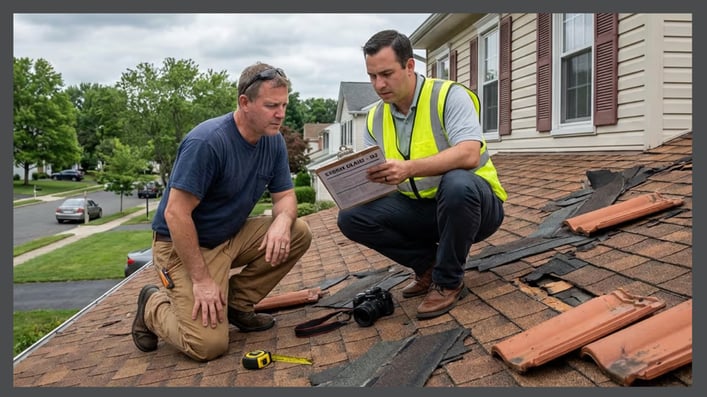
When an adjuster cites these reasons, simply telling them "code requires it" isn't enough. You need third-party visual evidence and code-backed justification that forces them to address the requirement in writing.
The Solution: Building an Unshakeable Sheathing Supplement
To get roof sheathing approved without delaying the job, your supplement needs to bridge the gap between building requirements and line-item software pricing.
A successful sheathing supplement requires a three-part documentation strategy:
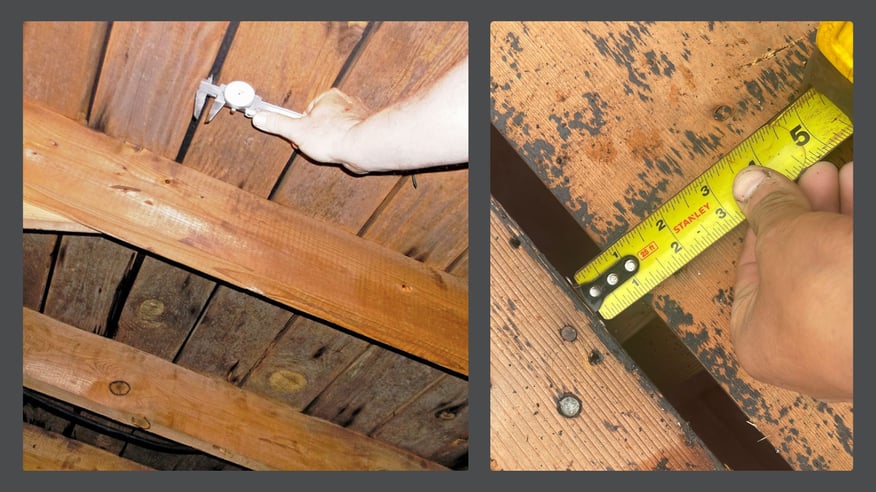
- Clear Photo Documentation Prior to Installation: You must capture clear, wide-angle and close-up photos of the exposed decking immediately after tear-off, clearly showing why the deck cannot hold nails or meet code.
- Local Code & Manufacturer Citations: You need to tie the physical damage directly to specific building code sections published by the International Code Council (ICC) .
- Correct Line-Item Overrides: Inputting sheathing correctly in your estimating software requires specific line items (like
RFG SHWTorRFG OSB) paired with detailed F9 notes that explain why spot repairs won't achieve a warrantable installation.
(If your internal team lacks the bandwidth to handle this back-and-forth documentation process on every file, see how our expert estimating and supplementing team helps contractors recover fair claim value.)
Stop Leaving Money on the Roof
Roof sheathing isn't an upgrade—it's a necessity for installing a safe, code-compliant roof system. Leaving it off your supplements means leaving thousands of dollars in legitimate claim value behind.
Want the exact blueprint on how to document and format your sheathing supplements so adjusters approve them without pushback? We’ve created a comprehensive, free guide: "How to Get Roof Sheathing Paid on Every Claim."
Inside, you'll learn:
- The exact photo checklist needed to prove decking replacement is mandatory.
- Specific IRC building code citations to include in your line-item notes.
- How to handle adjusters who claim decking rot is purely pre-existing wear-and-tear.
- How our proven claim management process takes the administrative burden off your sales team.
Scroll down to fill out the form and get your free copy of the guide now!
.png?width=305&height=395&name=DOWNLOAD%20THE%20FREE%20GUIDE!%20-%20Balance%20(1).png)
Fill out the form below to download your free copy of the guide today.